Description
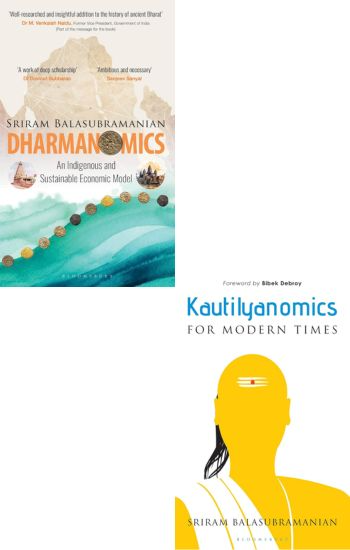
1. Dharmanomics : An Indigenous and Sustainable Economic Model :-
Did Rajaraja Chola, who built the world-renowned Brihadisvara temple in Tanjore, and Suryavarman II of Kambuja Desa (Cambodia), who built the world’s largest temple complex, Angkor Wat, erect these enduring marvels with a magic wand? Surely not. How did they nurture prosperity? What were the economic models that enabled them to leave the world awestruck? Sriram Balasubramanian’s sequel to the pathbreaking Kautilyanomics answers these questions by examining Common Era empires and kingdoms ranging from the Cholas, Pallavas, Pandyas and Vijayanagara to Southeast Asian kingdoms. Balasubramanian audaciously puts forward a novel, indigenous and sustainable framework called Dharmanomics—a function of Kautilyan Dharmic capitalism, of a Dharmic ecosystem driven by temples and Sreni (corporate guilds) Dharma—that spans thousands of years. It was put into practice much before the likes of Adam Smith and modern economic thinkers. It is a book for all ages—gutsy, thoughtprovoking and meticulously researched.
2. Kautilyanomics :-
India was an economic power to reckon with until its economic decline in the 18th century. What explains this long period of prosperity? The answer might lie in a framework of social and economic thought that lies buried in our ancient heritage, says Sriram Balasubramanian, of which Kautilya’s Arthashastra is a major example. Kautilyanomics for Modern Times seeks to do three things—first, to provide a structure and a context for Kautilya’s economic thoughts; second, to examine his work’s relevance today; and third, to do it in a way that a lay reader can follow and grasp easily. Kautilya’s thought is mainly articulated through the prism of dharmic capitalism and its components—some examples include his views on global economic outlook, state-market dynamics, and sustainable growth through observance of environmental, societal and familial responsibilities. Fathoming India’s rich economic and philosophical heritage and making use of it, Balasubramanian argues, would prove to be a great asset in India’s/the country’s/the nation’s ascent again.
Reviews
There are no reviews yet.