Textbook Of Medicinal Chemistry 3Ed Vol 2 (Pb 2026)
Publisher:
| Author:
| Language:
| Format:
Publisher:
Author:
Language:
Format:
₹575 Original price was: ₹575.₹489Current price is: ₹489.
In stock
Ships within:
In stock
ISBN:
Page Extent:
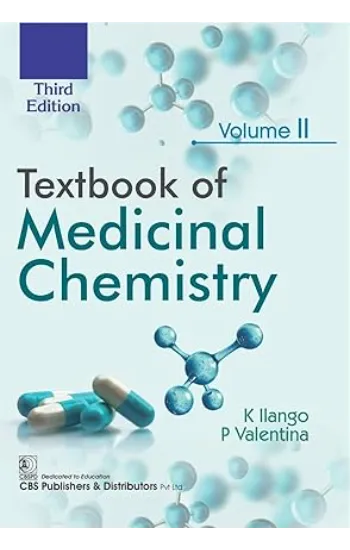
This book highlights the status of medicinal chemistry in drug discovery process. This volume encompasses 26 chapters. Chapters 1 to 10 discuss various anti-infective agents and antibiotics. Chapters 11 and 12 provide in-depth coverage of antiviral and anticancer drugs, with clear explanations of their mechanisms of action. Chapters 13 to 17 explore cardiovascular agents, including antianginal, antiarrhythmic, antihypertensive, antihyperlipidemic drugs and anticoagulants. Chapters 18 and 20 cover oral hypoglycemic agents and hormones, respectively, illustrated with detailed figures. Chapter 19 addresses steroids, including their nomenclature, stereochemistry, structures, and synthesis. Chapter 21 focuses on diagnostic drugs and reagents with relevant examples. Chapters 22 to 25 delve into drug discovery and development, quantitative structure–activity relationship (QSAR), computer-aided drug design (CADD) and enzyme inhibition, supported by well-structured illustrations and equations. Chapter 26 introduces the foundational concepts of combinatorial chemistry.

About Author
Reviews
There are no reviews yet.

Reviews
There are no reviews yet.