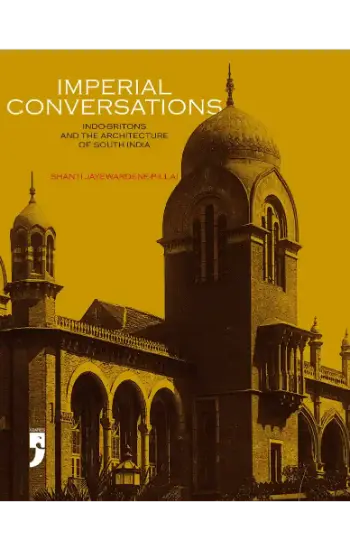
Imperial Conversations: Indo-Britons and the Architecture of South India
Publisher:
| Author:
| Language:
| Format:
Publisher:
Author:
Language:
Format:
₹895 Original price was: ₹895.₹716Current price is: ₹716.
In stock
Ships within:
In stock
ISBN:
Page Extent:
The eighteenth century was a time of profound upheaval when economic and political control of southern India passed from native kings to the East India Company. Hand-in-hand with the resultant conflicts and skirmishes, a process of cultural sharing was gaining ground which went on to manifest itself in the form of a flourishing imperial cultural in the nineteenth century. About Author : Shanti Jayewardene-Pillai is trained as an architect and studied history at University College London and Oxford University. Her research interests focus on the intersection of empire and mainstream European and South Asian architectural history. She now lives in Oxford shire. Contents : Preface Introduction: Mutual Fascination and Conflict 1. A Pluralist Society: Patrons and Designers 2. Invisible Indians and ‘Science Experts’: Thomas Fiott de Havilland and St. Andrew’s Kirk 1816-21 3. Excited by Athenian Antiquities: The Pachaiyappa School 1846-50 4. The ‘Aesthetic Imperialists’: The Public Works Department (PWD) 5. Coveting a Forbidden Place: The Board of Revenue Building 1859-70 6. The Lure of Indian Aesthetics: Presidency College 1864-67 and Senate House, University of Madras 1869-78 Glossary Bibliography Index

About Author
Reviews
There are no reviews yet.

Reviews
There are no reviews yet.