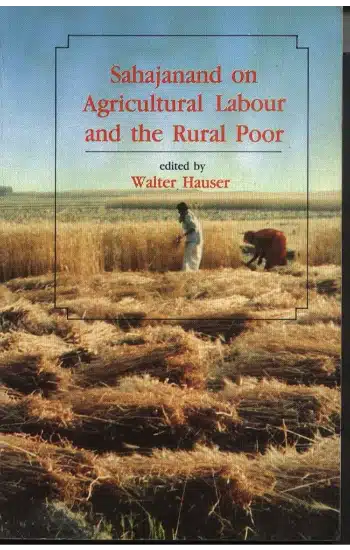
Sahajanand on Agricultural Labour and the Rural Poor
Publisher:
| Author:
| Language:
| Format:
Publisher:
Author:
Language:
Format:
₹295 Original price was: ₹295.₹236Current price is: ₹236.
In stock
Ships within:
In stock
ISBN:
Page Extent:
The full impact of Swami Sahajanand Saraswati on the social andpolitical history of twentieth-century India is only now beginningto be fully understood and appreciated. A man of enormousintellectual and personal complexity he came from Eastern U.P.while his major political role was played out in the neighbouringstate of Bihar in the Bihar Provincial Kisan Sabha and after 1936on the national stage in All India Kisan Sabha. The Khet Mazdoortract presented here in an edited translation and in the originalHindi, provides textual access to an activist constantly on theleading edge of social, cultural, and political change, which forSahajanand had to be transformational in character. Hence, givenhis background in representing the interests of peasant tenants inthe early and middle 193s, it is not surprising to find him herearguing the case for agricultural labourers and the rural poor onthe margins of the Indian social experience. But who cares for thepoor? he asks rhetorically, and in the five short chapters of thisessay he vividly describes their condition and their history andsubmits proposals for change that in many respects have as muchrelevance in 1994 as they did in 1941. Professor Hauser hasrendered an easily readable English translation of Sahajanandstract and an invaluable glossary which will serve to introduce bothgeneral and specialist readers to the richly descriptive languageSahajanand employed in making his argument. Hausers editorial notesprovide the broader intellectual and ideological context withinwhich Sahajanand discussed the social and political of rural Indiain the 193s and 194s. In his brief introduction Professor Hauserexamines the career and some of the salient writings of the Swamiand brings into sharp focus the core of his philosophy and activismduring the crucial years of transition in the political life of thenation.

About Author
Reviews
There are no reviews yet.

Reviews
There are no reviews yet.