
SalePaperback
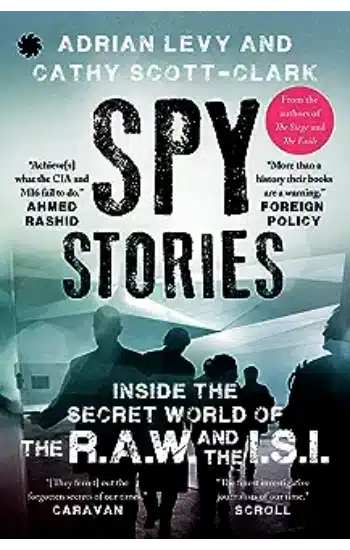

Pre-script: I had given it three stars. But as I finished my review, I was inclined to drop it down to two stars.
The authors deserve commendation for the efforts they have put into gathering all the stories and stringing them into narrative work in their book. They have chronicled the last twenty years of espionage and counter-espionage of the two nuclear-powered states in one of the most volatile regions of the world. They have discussed all the epochal events that have shaped the two main spy agencies of ISI and RAW and other allied agencies to safeguard their borders.
However, what they have been clearly successful in is painting the two agencies in their own shades. The ISI comes out to be compromised and utterly incompetent in regulating terror outfits that they had patronised for years. The RAW comes out as bureaucratic, slow, and of late saffron-shaded. The two main sources of info they have used are a severely compromised agent who turned on his own agency and another whose carefully spoken words betray her political leanings.
While the authors have covered all major events in a detailed manner, there are a few passages that clearly show how they want to portray India: as a clear opposite of Pakistan, a sectarian, recently turned majoritarian, and sometimes incompetent, sometimes vile nation (in terms of national security). However, there are a few passages that are either factually wrong or inferred in a certain way to push their own agenda that even an amateur like me could see through.
They mentioned that the valley voted BJP to power where it formed an alliance with PDP. It is abundantly clear that the valley did not for the BJP. It was the regions of Jammu and Ladakh that did so.
Then, they mention that the security forces fired live rounds. It was all over the news that they had to resort to pellet guns. The authors have tried their best to show that the security forces have aggressors, even when we have seen a gun-wielding security person being beaten mercilessly by a maddening crowd.
Their bit on CAA conveniently skips over the fact that religious minorities are persecuted in the three countries. It clearly glosses over the fact that this Act was just to speed up the process and that Muslims from these countries are not barred from applying for citizenship in India. But then, why let facts come in the way of propaganda? Clearly, they have borrowed a leaf from the book of Hasan Minhaj.
The laughable bit about Arnab having prior information on Balakot strikes is exactly that: laughable. Everyone knew that the Indian government would extract their pound of flesh after Pulwama because everyone had seen how India responded after the reprehensible Uri massacre. And if my memory serves me right, in the chats, there was no mention of Balakot. Just that something big will happen.
The icing on the cake is their report on the ceasefire violations committed by India, as alleged by Pakistan. However, the same information was not taken from the Indian side.
This book has tried to paint Pakistan as a state that is desperately trying to hold itself from religious fanaticism but does little to question how did it manage to come to this position.
Sumit Banerjee –
Pre-script: I had given it three stars. But as I finished my review, I was inclined to drop it down to two stars.
The authors deserve commendation for the efforts they have put into gathering all the stories and stringing them into narrative work in their book. They have chronicled the last twenty years of espionage and counter-espionage of the two nuclear-powered states in one of the most volatile regions of the world. They have discussed all the epochal events that have shaped the two main spy agencies of ISI and RAW and other allied agencies to safeguard their borders.
However, what they have been clearly successful in is painting the two agencies in their own shades. The ISI comes out to be compromised and utterly incompetent in regulating terror outfits that they had patronised for years. The RAW comes out as bureaucratic, slow, and of late saffron-shaded. The two main sources of info they have used are a severely compromised agent who turned on his own agency and another whose carefully spoken words betray her political leanings.
While the authors have covered all major events in a detailed manner, there are a few passages that clearly show how they want to portray India: as a clear opposite of Pakistan, a sectarian, recently turned majoritarian, and sometimes incompetent, sometimes vile nation (in terms of national security). However, there are a few passages that are either factually wrong or inferred in a certain way to push their own agenda that even an amateur like me could see through.
They mentioned that the valley voted BJP to power where it formed an alliance with PDP. It is abundantly clear that the valley did not for the BJP. It was the regions of Jammu and Ladakh that did so.
Then, they mention that the security forces fired live rounds. It was all over the news that they had to resort to pellet guns. The authors have tried their best to show that the security forces have aggressors, even when we have seen a gun-wielding security person being beaten mercilessly by a maddening crowd.
Their bit on CAA conveniently skips over the fact that religious minorities are persecuted in the three countries. It clearly glosses over the fact that this Act was just to speed up the process and that Muslims from these countries are not barred from applying for citizenship in India. But then, why let facts come in the way of propaganda? Clearly, they have borrowed a leaf from the book of Hasan Minhaj.
The laughable bit about Arnab having prior information on Balakot strikes is exactly that: laughable. Everyone knew that the Indian government would extract their pound of flesh after Pulwama because everyone had seen how India responded after the reprehensible Uri massacre. And if my memory serves me right, in the chats, there was no mention of Balakot. Just that something big will happen.
The icing on the cake is their report on the ceasefire violations committed by India, as alleged by Pakistan. However, the same information was not taken from the Indian side.
This book has tried to paint Pakistan as a state that is desperately trying to hold itself from religious fanaticism but does little to question how did it manage to come to this position.