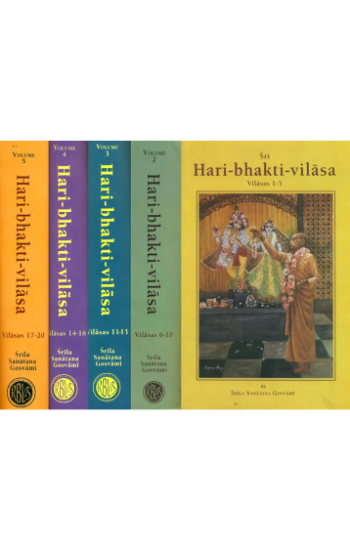
Sri Hari-Bhakti-Vilasa: Vilasa 1 to 20 (Set of 5 Books)
Publisher:
| Author:
| Language:
| Format:
Publisher:
Author:
Language:
Format:
₹5,599 Original price was: ₹5,599.₹5,598Current price is: ₹5,598.
In stock
Ships within:
In stock
ISBN:
Page Extent:
Vedic literature is traditionally understood to be of two kinds—fruitive (karma-kanda) and transcendental (bhakti and jnana-kanda). Those inclined toward fruitive works naturally gravitate to rituals, rules, and rewards, while those drawn to transcendence seek liberation or loving devotion to the Supreme. This distinction is not a division of truth, but an arrangement of the Creator—ensuring that each soul advances steadily from their current position according to their qualifications.
The smarta tradition supports the karmis, prescribing detailed rituals to strengthen their faith in dharma and gradual progress. For those who rise beyond material desires and enter the path of devotional service, a natural taste for spiritual life develops. As the Srimad-Bhagavatam teaches, one who is neither overly attached nor fully detached can achieve perfection through loving devotion to the Lord.
This volume also discusses true renunciation—not rejecting the Lord’s possessions as mundane, but accepting all in relation to Him without selfish attachment. It draws on the Srimad-Bhagavatam’s insight that the Vedas sometimes speak indirectly, first engaging people in material duties just as a father lures a child to take medicine by offering candy.
To guide seekers in Kali-yuga toward the highest goal—Kṛṣṇa-prema—Śrī Caitanya Mahāprabhu instructed Śrīla Sanātana Gosvāmī to compose the Vaiṣṇava-smṛti, known as Śrī Hari-bhakti-vilāsa. Gathering scriptural evidence with the assistance of Śrī Gopāla Bhaṭṭa Gosvāmī, Sanātana Gosvāmī presented a comprehensive text on vows, rituals, and conduct for devotees, complete with his own Digdarśinī commentary for clarity.
Rich in philosophical reasoning and devotional instruction, this work bridges the paths of karma and bhakti, showing how all Vedic literature ultimately guides the soul toward loving service to Lord Hari.

Vedic literature is traditionally understood to be of two kinds—fruitive (karma-kanda) and transcendental (bhakti and jnana-kanda). Those inclined toward fruitive works naturally gravitate to rituals, rules, and rewards, while those drawn to transcendence seek liberation or loving devotion to the Supreme. This distinction is not a division of truth, but an arrangement of the Creator—ensuring that each soul advances steadily from their current position according to their qualifications.
The smarta tradition supports the karmis, prescribing detailed rituals to strengthen their faith in dharma and gradual progress. For those who rise beyond material desires and enter the path of devotional service, a natural taste for spiritual life develops. As the Srimad-Bhagavatam teaches, one who is neither overly attached nor fully detached can achieve perfection through loving devotion to the Lord.
This volume also discusses true renunciation—not rejecting the Lord’s possessions as mundane, but accepting all in relation to Him without selfish attachment. It draws on the Srimad-Bhagavatam’s insight that the Vedas sometimes speak indirectly, first engaging people in material duties just as a father lures a child to take medicine by offering candy.
To guide seekers in Kali-yuga toward the highest goal—Kṛṣṇa-prema—Śrī Caitanya Mahāprabhu instructed Śrīla Sanātana Gosvāmī to compose the Vaiṣṇava-smṛti, known as Śrī Hari-bhakti-vilāsa. Gathering scriptural evidence with the assistance of Śrī Gopāla Bhaṭṭa Gosvāmī, Sanātana Gosvāmī presented a comprehensive text on vows, rituals, and conduct for devotees, complete with his own Digdarśinī commentary for clarity.
Rich in philosophical reasoning and devotional instruction, this work bridges the paths of karma and bhakti, showing how all Vedic literature ultimately guides the soul toward loving service to Lord Hari.
About Author
Reviews
There are no reviews yet.

Reviews
There are no reviews yet.