
SalePaperback
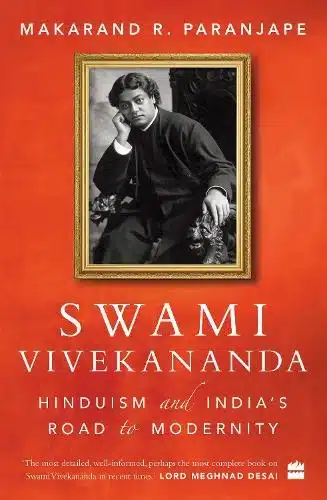

I consider that, we should first read a person before worshipping him, that will make more advantages in our lives. Especially Vivekananda, by reading him, I have completely changed myself. This book is one of the best books written of Swamiji. Everyone who is curious about Swamiji, should read this book.
As we know, for the Western world, Swamiji was a representative of India’s cultural and religious spirit. But in India, he was a staunch social reformer, who wanted to dismiss every ill-rituals like the birth-based caste system and promoted education of women. The first chapter traces his activities from the time of parliament of World religions to his death.
Then, the author discusses Swamiji’s early life and how he came in contact with his master, Sri Ram-Krishna Dev. Author discussed why a large part of 18th century Bengali ‘Bhadraloks’ were deeply influenced by Ram-Krishna Dev.
Was the Hinduism a globalized version of the original ancient Indian faith? Was it inspired by colonialization? The author answers many questions like these which were quite satisfactory.
In today’s World, representative of all the religions claim that, their religion is the true science. But we all know that truth can’t be confined in one holy eternal truth. According to Swamiji, in 18th century, when all religious foundations were being destroyed by the hard blow of the hammer of modern science, Hindus must reconstruct their religious foundations to survive. Author described that Swamiji has tried to connect the missing common dots of the double helix, science and religion.
My favorite chapter was that about the reconstruction of national education system according to Swamiji’s guidance. This chapter is the most important chapter in the book. Author present’s Swamiji’s poetic spirit by introducing us to poems and songs composed by him.
We know that the word ‘modern’ is a European construct. But as author suggests, there can’t be only one version of modernity, that is a true decolonial approach. Author just not tells us about the importance of modernity in India, but also introduces us about ‘Indian Modernity’, which is a combination of ancient spirituality and modern science, that will lead us to a glorious future. As the author said, “what appears to be tradition has been reinvented in modern times and what is patently modern has its roots deep in the seedbed of tradition”.
akash_dwip_datta (verified owner) –
I consider that, we should first read a person before worshipping him, that will make more advantages in our lives. Especially Vivekananda, by reading him, I have completely changed myself. This book is one of the best books written of Swamiji. Everyone who is curious about Swamiji, should read this book.
As we know, for the Western world, Swamiji was a representative of India’s cultural and religious spirit. But in India, he was a staunch social reformer, who wanted to dismiss every ill-rituals like the birth-based caste system and promoted education of women. The first chapter traces his activities from the time of parliament of World religions to his death.
Then, the author discusses Swamiji’s early life and how he came in contact with his master, Sri Ram-Krishna Dev. Author discussed why a large part of 18th century Bengali ‘Bhadraloks’ were deeply influenced by Ram-Krishna Dev.
Was the Hinduism a globalized version of the original ancient Indian faith? Was it inspired by colonialization? The author answers many questions like these which were quite satisfactory.
In today’s World, representative of all the religions claim that, their religion is the true science. But we all know that truth can’t be confined in one holy eternal truth. According to Swamiji, in 18th century, when all religious foundations were being destroyed by the hard blow of the hammer of modern science, Hindus must reconstruct their religious foundations to survive. Author described that Swamiji has tried to connect the missing common dots of the double helix, science and religion.
My favorite chapter was that about the reconstruction of national education system according to Swamiji’s guidance. This chapter is the most important chapter in the book. Author present’s Swamiji’s poetic spirit by introducing us to poems and songs composed by him.
We know that the word ‘modern’ is a European construct. But as author suggests, there can’t be only one version of modernity, that is a true decolonial approach. Author just not tells us about the importance of modernity in India, but also introduces us about ‘Indian Modernity’, which is a combination of ancient spirituality and modern science, that will lead us to a glorious future. As the author said, “what appears to be tradition has been reinvented in modern times and what is patently modern has its roots deep in the seedbed of tradition”.